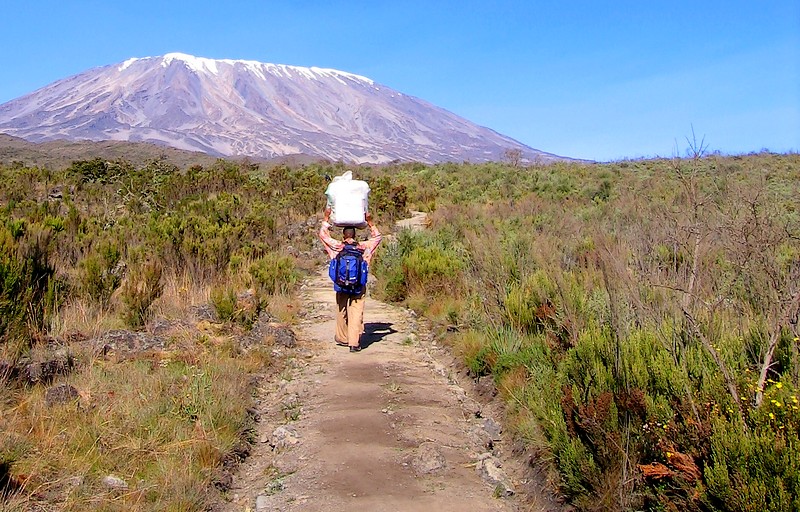
All You Need to Know About Your Kilimanjaro Climb
Your essential guide to preparing for the adventure of a lifetime.
Your essential guide to preparing for the adventure of a lifetime.
Mount Kilimanjaro, with its three volcanic cones, Kibo, Mawenzi, and Shira, is a dormant volcano in Tanzania. It is the highest mountain in Africa and the highest single free-standing mountain in the world at 5895 metres (19,341 ft) above sea level. Kilimanjaro National Park was established in 1973 and is a UNESCO World Heritage site, protecting the mountain's unique natural environment, which ranges from lush rainforests to an arctic summit.
The best time to climb is during the dry seasons: January to March and June to October. These periods offer the clearest skies and most stable weather, increasing your chances of a successful and enjoyable summit.
Kilimanjaro is open to beginners! You do not need to be a professional mountaineer to successfully complete this adventure. The main requirements are good physical health and a reasonable level of daily physical activity. However, you should never underestimate the mountain. In the months leading up to the trek, it is advisable to prepare by increasing your physical exercise, with a mix of cardiovascular (running, cycling, swimming) and strength training (hiking with a backpack, squats, lunges) exercises.
The real challenge of this adventure will not be the physical exertion, but the altitude. Poor acclimatization is the main risk on Kilimanjaro and the primary reason climbers do not reach the summit. As you ascend, the air becomes thinner, and your body gets less oxygen. This can lead to Acute Mountain Sickness (AMS).
Everyone is different and reacts differently to altitude. That is why it is crucial to listen carefully to the advice of your professional guides. To minimize the effects and increase your chances of success, we emphasize:
It is recommended to see your doctor before the ascent to ensure you are in good physical health and to find out about medications that can reduce the effects of altitude.
It is also highly recommended to purchase travel insurance that includes helicopter evacuation, medical services, and coverage for high-altitude trekking up to 6,000m.